Georgia State researchers design artificial vision device for microrobots
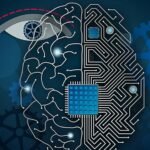
Researchers at Georgia State University (GSU) have developed an innovative artificial vision device, referred to as an ‘electric eye,’ for micro-sized robots. This device replicates the biochemical processes involved in natural vision using synthetic methods. Notably, the researchers have made significant advancements in color recognition, which has been a challenging area due to the downsizing limitations of color sensing devices. Traditional color sensors consume substantial physical space and offer less accurate color detection.
The breakthrough achieved by GSU researchers is attributed to a unique vertical stacking architecture in the device’s design. The utilization of van der Waals semiconductors empowers the sensors with precise color recognition capabilities while simplifying the downscaled lens system. By leveraging van der Waals materials, such as the semiconductors, the researchers can finely control critical parameters like band structure, thickness, and others to detect red, green, and blue colors.
The research, published in the scientific journal ACS Nano, primarily focuses on demonstrating the fundamental principles and feasibility of artificial vision using the new micro-sized image sensor. Sidong Lei, the lead researcher and assistant professor of Physics at GSU, emphasizes that vision captures over 80% of information in various domains, including research, industry, medicine, and daily life. The ultimate objective of their research is to develop a micro-scale camera for microrobots capable of navigating narrow and inaccessible spaces, thus opening up new possibilities in medical diagnosis, environmental studies, manufacturing, archaeology, and more.
The technology is currently in the patent pending stage with Georgia State’s Office of Technology Transfer and Commercialization.
Moving on to a different topic, as of April 2023, the NHS waiting list in England had reached a record high with 7.42 million people waiting for treatment. Among them, nearly 3.09 million had been waiting for over 18 weeks, and around 371,000 had been waiting for over a year. The median waiting time for treatment was 13.8 weeks, nearly double the pre-COVID median wait of 7.2 weeks in April 2019.
The AI Diagnostic Fund, one of the primary applications in healthcare, aims to utilize AI tools for analyzing chest X-rays. Chest X-rays are a common diagnostic tool for lung cancer, the leading cause of cancer-related deaths in the UK. With more than 600,000 chest X-rays conducted each month in England, the widespread implementation of AI tools across NHS Trusts can assist clinicians in early cancer detection, leading to improved patient outcomes.
The integration of AI in the NHS has already shown positive results, including reducing the time required to diagnose and treat stroke patients. By enabling faster stroke diagnosis, AI has tripled the chances of patients living independently after a stroke.
The funding provided through the AI Diagnostic Fund will support the implementation of any AI diagnostic tool that NHS Trusts wish to deploy. However, the proposals must demonstrate value for money to receive approval. The government has already invested £123 million in 86 AI technologies, benefiting patients through improved stroke diagnosis, screening, cardiovascular monitoring, and home-based condition management.
The introduction of AI into healthcare aligns with the NHS’s mission to adopt the latest proven technology to enhance patient care and provide value for taxpayers.