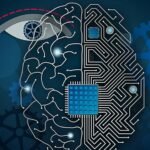
Exploring Neural Networks and Deep Learning
In recent years, neural networks and deep learning have emerged as powerful tools within the field of artificial intelligence, revolutionizing various domains such as computer vision, natural language processing, and autonomous systems. These technologies have led to remarkable advancements in pattern recognition, data analysis, and decision-making. In this blog, we will delve into the world of neural networks and deep learning, exploring their fundamental concepts, architectures, and applications.
Neural Networks: Mimicking the Human Brain
At the heart of deep learning lies the concept of neural networks, inspired by the complex structure and functionality of the human brain. Neural networks consist of interconnected nodes, or artificial neurons, organized into layers. Information flows through these layers, with each neuron performing computations and transmitting signals to other neurons.
Artificial neurons, also known as perceptrons, receive inputs, apply weights to them, and pass the weighted sum through an activation function to produce an output. The activation function introduces non-linearity, allowing neural networks to capture complex relationships and make accurate predictions.
Layers in Neural Networks
Neural networks are typically organized into layers, consisting of an input layer, one or more hidden layers, and an output layer. The input layer receives the raw data, which is then processed through the hidden layers, with each layer extracting higher-level features and representations. Finally, the output layer produces the network’s predictions or decisions.
Deep Learning: Unleashing the Power of Depth
Deep learning refers to the training and use of neural networks with multiple hidden layers. The depth of these networks allows them to learn intricate patterns and representations from vast amounts of data. Deep learning architectures are capable of automatically extracting high-level features from raw data, leading to superior performance in complex tasks.
Convolutional Neural Networks (CNNs)
Convolutional Neural Networks (CNNs) are a specialized type of neural network primarily used for computer vision tasks, such as image classification and object detection. CNNs excel at extracting local patterns and spatial hierarchies from images through the use of convolutional layers and pooling layers. The convolutional layers apply filters to capture relevant features, while the pooling layers downsample the feature maps, reducing computational complexity.
Recurrent Neural Networks (RNNs)
Recurrent Neural Networks (RNNs) are designed to process sequential data, making them suitable for tasks involving time series analysis, speech recognition, and natural language processing. Unlike traditional feedforward neural networks, RNNs have recurrent connections that allow information to persist across time steps. This recurrent architecture enables RNNs to model temporal dependencies and capture long-term context.
Long Short-Term Memory (LSTM)
A variant of RNNs, known as Long Short-Term Memory (LSTM), addresses the vanishing gradient problem that hampers the training of deep RNNs. LSTMs introduce memory cells and gating mechanisms, enabling the network to selectively retain and update information over time. LSTMs have proven effective in tasks requiring long-term dependencies, such as language translation and sentiment analysis.
Applications of Neural Networks and Deep Learning
Neural networks and deep learning have revolutionized numerous domains and enabled significant advancements in various fields. Some notable applications include:
Computer Vision: Deep learning techniques, particularly CNNs, have achieved unprecedented success in tasks such as image classification, object detection, facial recognition, and image generation.
Natural Language Processing (NLP): Neural networks, including RNNs and Transformers, have greatly advanced the fields of machine translation, sentiment analysis, text generation, and language understanding.
Autonomous Systems: Deep learning plays a crucial role in autonomous vehicles, robotics, and drones by enabling perception, decision-making, and control based on sensor inputs and environmental data.
Healthcare: Neural networks have demonstrated impressive performance in medical imaging analysis, disease diagnosis, drug discovery, and personalized medicine.
Finance: Deep learning algorithms are utilized in financial applications for stock market prediction, fraud detection, credit scoring, and algorithmic trading.