Understanding Machine Learning Algorithms
Machine learning is a subset of artificial intelligence that focuses on developing algorithms and models that enable computers to learn and make predictions or decisions based on data. With the exponential growth of data and computational power, machine learning has become a powerful tool across various domains. In this blog, we will explore the fundamentals of machine learning algorithms and their role in driving intelligent systems.
Supervised Learning Algorithms
Supervised learning is a popular machine learning approach where the algorithm learns from labeled training data. The data consists of input features and corresponding output labels or target values. Supervised learning algorithms aim to learn the mapping between inputs and outputs, allowing them to make predictions on unseen data accurately. Some commonly used supervised learning algorithms include:
Linear Regression: A linear regression algorithm models the relationship between input features and continuous output values. It estimates the coefficients that best fit a linear equation to the data.
Logistic Regression: Logistic regression is used for classification problems where the output labels belong to discrete classes. It estimates the probability of an input belonging to a particular class using a logistic function.
Decision Trees: Decision trees are versatile algorithms that divide the input space into hierarchical decision regions based on feature values. They are widely used for classification and regression tasks.
Random Forests: Random forests combine multiple decision trees to make predictions. Each tree is trained on a different subset of the data, and their outputs are aggregated to obtain the final prediction.
Unsupervised Learning Algorithms
In unsupervised learning, the algorithm learns patterns and structures in unlabeled data without explicit output labels. Unsupervised learning algorithms seek to uncover hidden relationships or clusters in the data. Some popular unsupervised learning algorithms include:
K-Means Clustering: K-means clustering partitions data into k distinct clusters based on similarity. It aims to minimize the intra-cluster distance and maximize the inter-cluster distance.
Hierarchical Clustering: Hierarchical clustering builds a hierarchy of clusters, organizing data points into a tree-like structure. It can be agglomerative, starting with individual data points as clusters, or divisive, starting with all data points as a single cluster.
Principal Component Analysis (PCA): PCA is a dimensionality reduction technique that transforms high-dimensional data into a lower-dimensional representation while preserving the most significant variance in the data.
Association Rules: Association rule mining identifies patterns and relationships between variables in transactional or categorical data. It is commonly used in market basket analysis and recommendation systems.
Deep Learning Algorithms
Deep learning algorithms are inspired by the structure and function of the human brain, utilizing artificial neural networks with multiple layers. Deep learning has gained significant attention due to its ability to automatically learn complex representations from data. Some key deep learning algorithms are:
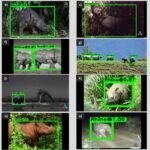
Convolutional Neural Networks (CNNs): CNNs are commonly used in computer vision tasks, analyzing image and video data. They use convolutional layers to extract meaningful features from images.
Recurrent Neural Networks (RNNs): RNNs are designed for sequential data, such as text or time series. They utilize recurrent connections to capture temporal dependencies and have applications in natural language processing and speech recognition.
Long Short-Term Memory (LSTM): LSTM is an RNN variant that overcomes the vanishing gradient problem, allowing it to capture long-term dependencies in sequential data.
Generative Adversarial Networks (GANs): GANs consist of two neural networks, a generator and a discriminator, that compete against each other. GANs are used to generate synthetic data that resembles the training data, and they have applications in image and text generation.