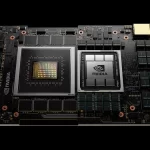
The 2025 Shift from Nvidia GPUs to Google TPUs and the $6.32B Inference Cost Challenge
The Biggest Shift in AI Infrastructure Is Already Underway — and Most People Are Missing It
The largest migration in AI infrastructure history is happening right now.
And outside of a few engineering teams and hyperscaler boardrooms, almost no one is talking about it.
Nvidia built a $3 trillion empire on training.
But training is episodic.
Inference is permanent.
And on inference, Nvidia’s architectural advantage is eroding fast.
Over the past year alone:
- Midjourney cut inference costs by 65%
- Anthropic committed to up to one million Google TPUs
- Meta entered multibillion-dollar TPU negotiations
- Even Nvidia’s largest customers began openly hedging with ASICs
This isn’t a temporary optimization cycle.
It’s a structural shift.
And 2026 will likely be remembered as the year the GPU monopoly cracked.
The Five Signals Wall Street Overlooked
Long before the headlines, the migration was visible to anyone watching closely:
September 2024
Google Cloud TPU v5e pods sold out across three regions for the first time ever. Demand exceeded supply by 340%, forcing Google to accelerate next-gen production.
Q4 2024
Nvidia’s data-center revenue growth slowed sharply. Analysts blamed “normalization.”
The real story: inference workloads were already moving off GPUs.
January 2025
Job postings mentioning JAX surged 340% YoY, while CUDA grew just 12%.
Engineers follow economics long before markets do.
March 2025
Verified reports emerged of H100 clusters being decommissioned and replaced with TPUs. One computer-vision startup cut its monthly inference bill from $340K to $89K.
May 2025
Google Cloud’s AI revenue began growing more than twice as fast as Azure ML.
When hyperscalers compete, growth rates reveal the truth.
The smart money saw this coming months ago.
One Chart Explains Everything
Training is a one-time cost.
Inference is a forever expense.
For frontier models:
- Training: ~$150M
- Inference over 5 years: $10–15B
By 2030, inference is expected to consume 75–80% of all AI compute.
When inference becomes 15–100× more expensive than training, only one metric matters:
Cost per million tokens at scale.
GPUs were never designed for that world.
Where Nvidia’s Edge Breaks Down
Nvidia dominated training because GPUs are flexible, programmable, and backed by CUDA.
Inference has different priorities:
- Ultra-low latency
- Extreme power efficiency
- Deterministic execution
- Minimal memory movement
Google TPUs were built for exactly this—inside Search, YouTube, and Translate—processing trillions of inferences per day.
The result:
- ~4–5× better performance per dollar
- ~65% lower power per token
- 2–3× higher throughput on recommendation and retrieval workloads
At hyperscale, those differences compound into billions.
The Cost Reality No One Shows You
A three-year, always-on inference deployment tells the real story:
- GPU cluster total cost: ~$177M
- TPU pod total cost: ~$78M
That’s nearly $100M saved for a mid-sized deployment.
Scale that to Meta-level infrastructure and the savings reach tens of billions.
Suddenly, the TPU negotiations make perfect sense.
This Is Already Happening
- Midjourney cut annual inference spend by ~$17M
- Anthropic committed to massive TPU capacity through 2027
- Perplexity, Character.AI, Cohere, Stability AI migrated large portions of inference
- Hugging Face now defaults large-model inference to TPUs
Migration isn’t theoretical anymore. It’s operational.
And the payback period is often measured in weeks, not years.
Why ASICs Win the Inference Era
- Systolic architectures eliminate wasted compute
- Deterministic execution avoids GPU branch inefficiencies
- On-chip memory + optical interconnects remove data bottlenecks
- Mature compilers (XLA) now rival or beat CUDA on inference
- Radical power efficiency becomes decisive at 100K+ chip scale
This isn’t about vendor preference.
It’s about physics, energy, and operating margins.
Nvidia’s Position Going Forward
Nvidia still dominates:
- Training
- Research
- Rapid prototyping
But inference—the largest and fastest-growing segment of AI compute—is no longer theirs by default.
CUDA lock-in is weakening.
Multi-silicon strategies are becoming standard.
And price wars would threaten the margins that support Nvidia’s valuation.
The future looks less like monopoly—and more like segmentation.
What to Watch in 2026
- Financial institutions quietly adopting ASIC inference
- “Hybrid infrastructure” language from major AI labs
- First YoY decline in Nvidia data-center growth
- TPU deployments crossing multi-million chip scale
When that happens, the ecosystem becomes self-reinforcing.
The Bottom Line
Training built Nvidia’s empire.
Inference will define the next decade.
Companies that lock themselves into GPU-only inference today are baking in long-term competitive disadvantage.
The winners of 2027–2028 are making this decision now, not later.
And the biggest mistake investors can make is assuming that yesterday’s training dominance guarantees tomorrow’s inference economics.