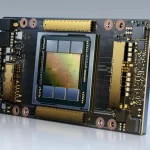
Space-Based Data Centers: The Next Frontier of AI Computing in 2025
Space-Based Data Centres: The Next Frontier of AI Computing in 2025
As artificial intelligence reshapes nearly every industry, demand for computing power is exploding. Earth-based data centers—already under pressure from energy costs, water usage, and environmental regulation—are approaching physical and economic limits. In response, a once-speculative idea is gaining real momentum: space-based AI computing.
In 2025, orbital data centers are no longer science fiction. Tech giants, startups, and space agencies are actively exploring how AI infrastructure can be deployed in orbit, powered by constant solar energy and freed from terrestrial constraints. The result could be a fundamental shift in how AI is trained, scaled, and sustained.
This article explores what space-based data centers are, why they matter, who is building them, and whether orbital computing could unlock the next era of AI growth.
What Are Space-Based Data Centres?
Space-based data centers are computing platforms deployed in orbit—most commonly low Earth orbit (LEO)—designed to run AI workloads such as model training, inference, and large-scale data processing.
Instead of massive buildings on land, these systems rely on satellites equipped with high-performance processors, connected through laser inter-satellite links to form distributed computing clusters. Power is generated via large solar arrays, while heat is dissipated through radiative cooling into space.
Although early concepts date back decades, the AI boom has accelerated development. In 2025, the focus is on solar-powered, modular systems capable of operating continuously in sun-synchronous orbits. These platforms are especially well-suited for processing satellite imagery, climate data, and other space-native datasets directly in orbit.
Core Components of an Orbital Data Center
Compute Hardware
Radiation-hardened GPUs, TPUs, and AI accelerators designed to withstand cosmic rays and temperature extremes.
Power Systems
Large photovoltaic arrays delivering uninterrupted solar energy—without grid limits, weather disruption, or night cycles.
Communication Infrastructure
High-bandwidth laser links enabling fast satellite-to-satellite and satellite-to-ground data transfer.
Thermal Management
Advanced radiative cooling and phase-change systems adapted for microgravity environments.
Together, these components create a computing platform that scales beyond Earth’s physical and regulatory boundaries.
Market Size and Growth Outlook
While still early, the space-based data center market is expanding rapidly.
- 2025 market size: ~$500 million, driven by R&D and pilot deployments
- 2030 projection: $15–20 billion, with CAGR exceeding 80%
- 2035 outlook: $75+ billion, potentially capturing 10–15% of new data center investment
Key Growth Drivers
- Rising energy constraints and grid saturation on Earth
- Exponential growth in AI model size and training requirements
- Falling launch costs due to reusable rockets
- Regulatory pressure on carbon emissions and water usage
Space vs. Earth-Based Data Centers
Energy Efficiency
- Earth: 20–40% efficiency, heavy reliance on grid power
- Space: 90%+ efficiency with continuous solar exposure
Environmental Impact
- Earth: significant water use, heat pollution, carbon emissions
- Space: near-zero operational emissions, no water usage
Scalability
- Earth: limited by land, permitting, and infrastructure
- Space: modular, virtually unlimited expansion
Latency
- Earth: low latency for local workloads
- Space: higher Earth-link latency, near-zero satellite-to-satellite latency
Lifecycle analyses suggest orbital data centers can become carbon-neutral within 3–5 years of operation—far faster than terrestrial facilities.
Why Move AI Computing to Space?
1. Unlimited Clean Energy
Orbital solar arrays receive constant, unfiltered sunlight, enabling AI training at dramatically lower energy costs.
2. Sustainability at Scale
By exporting compute-driven heat and power demand off-planet, space-based systems reduce Earth’s environmental burden.
3. Massive Scalability
No land constraints, no local opposition—capacity grows simply by launching more modules.
4. Enhanced Security
Physical access is nearly impossible, offering inherent protection for sensitive workloads.
5. Advanced Edge & Space AI
On-orbit processing enables real-time decision-making for satellites, exploration missions, and Earth-observation systems.
Real-World Use Cases
- Climate & Earth Observation: Real-time wildfire detection, deforestation monitoring, weather modeling
- Autonomous Satellites: Self-optimizing constellations and collision avoidance
- Deep Space Missions: AI-driven navigation and analysis without Earth-roundtrip delays
- Defense & Intelligence: Secure, real-time data processing
- Scientific Simulation: Large-scale physics, climate, and materials modeling
Challenges Holding Orbital Computing Back
Despite its promise, major obstacles remain:
- High upfront launch costs (though rapidly declining)
- Radiation damage and hardware reliability
- Cooling and thermal complexity in microgravity
- Latency limits for real-time Earth applications
- Regulatory uncertainty around debris, spectrum, and jurisdiction
- Difficult maintenance and upgrade cycles
Most experts expect hybrid architectures—training in space, inference on Earth—to dominate early adoption.
Leading Players in Space-Based AI Computing
- Google – Project Suncatcher: Testing TPU-based orbital AI clusters
- Starcloud: NVIDIA-backed startup deploying GPU satellites
- SpaceX: Potential future integration with Starlink and Starship
- Blue Origin: Long-term vision of moving heavy industry off Earth
- ESA (ASCEND): European orbital cloud for sustainability and sovereignty
- China (CNSA): Government-backed orbital supercomputing initiatives
The Roadmap Ahead (2025–2035)
2025–2027: Proof-of-concept missions
2028–2030: Early commercial services
2031–2033: Mainstream adoption via hybrid cloud-orbit systems
2034–2035: Large-scale orbital AI infrastructure becomes standard
Final Takeaway
Space-based data centers won’t replace Earth-based infrastructure overnight—but they don’t need to. As AI’s appetite for energy and compute continues to grow, orbital computing offers something increasingly rare: scalability without environmental compromise.