Researchers develop low-cost sensor to enhance robots’ sense of touch

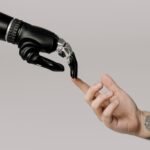
Researchers from Queen Mary University of London, in collaboration with teams from China and the USA, have developed an innovative L3 F-TOUCH sensor to enhance the tactile capabilities of robots. This sensor enables robots to “feel” objects and adjust their grip accordingly, a crucial step towards achieving human-level dexterity in manipulation and grasping.

The study, published in IEEE Robotics and Automation Letters, highlights the importance of reliable tactile information and force sensing in robot hands and graspers. The human hand possesses the ability to sense pressure, temperature, texture, and pain, as well as distinguish objects based on their shape, size, and weight. In contrast, many existing robot hands lack integrated haptic capabilities, making it challenging for them to handle objects effectively. Without a sense of touch and knowledge about the interaction forces, robots may struggle to maintain a secure grip on objects or handle delicate items without causing damage.

Led by Professor Kaspar Althoefer, the team presents the L3 F-TOUCH sensor, which stands for Lightweight, Low-cost, and wireLess communication. This high-resolution fingertip sensor offers a solution for measuring an object’s geometry and determining the forces required for interaction. Unlike other sensors that estimate interaction forces using camera images of soft elastomer deformation, the L3 F-TOUCH directly measures interaction forces through an integrated mechanical suspension structure with a mirror system, achieving higher accuracy and a wider measurement range.

The compact suspension structure allows the elastomer to deform upon contact with the surface, measuring high-resolution contact geometry exposed to external forces. The elastomer’s displacement is tracked using a special marker, enabling the measurement of contact forces along three major axes (x, y, and z) through a calibration process.

Professor Althoefer emphasizes that future work will focus on extending the sensor’s capabilities to measure rotational forces, such as twist, while remaining accurate and compact. This advancement will enable robots to have a more comprehensive sense of touch and improve their performance in manipulation tasks, including human-robot interaction scenarios like patient rehabilitation or assisting the elderly.

The breakthrough achieved with the L3 F-TOUCH sensor holds significant potential for the future of robotics. By providing robots with a sense of touch, they can handle objects more effectively and perform complex manipulation tasks with greater precision and reliability. This technology opens up new possibilities for more advanced and agile robots, ushering in a new era of robotic capabilities.


Posted in

Aihub Team

Leave a Comment


Trustworthiness of AI applications in public sector

Trustworthiness of AI applications in public sector

Bringing AI closer to citizens – smart communities

 Bringing AI closer to citizens – smart communities

AI in practice and implementation strategies

AI in practice and implementation strategies

At July 4 cookouts with financial experts, AI takes centre stage while there are burgers, beers, and brainy bots.

At July 4 cookouts with financial experts, AI takes center stage while there are burgers, beers, and brainy bots.

Efficient Generative AI Summit

 Efficient Generative AI Summit

CDAO Chicag

CDAO Chicag

AI Hardware & Edge AI

AI Hardware & Edge AI

AI and the Future of Work

AI and the Future of Work

AI in Art and Creativity

AI in Art and Creativity

Exploring the Ethics of Artificial Intelligence

Exploring the Ethics of Artificial Intelligence

Demystifying Machine Learning

Demystifying Machine Learning

AI in healthcare

AI in Healthcare

New WEF research identifies revolutionary healthcare AI applications

New WEF research identifies revolutionary healthcare AI applications

Tesla’s AI supercomputer tripped the power grid

Tesla’s AI supercomputer tripped the power grid

Stephen Almond, ICO: Prioritise privacy when adopting generative AI

Stephen Almond, ICO: Prioritise privacy when adopting generative AI

Sony has a new ‘AI robotics’ drone division called Airpeak

Sony has a new ‘AI robotics’ drone division called Airpeak

SK Telecom outlines its plans with AI partners

SK Telecom outlines its plans with AI partners

Razer and ClearBot are using AI and robotics to clean the oceans

Razer and ClearBot are using AI and robotics to clean the oceans

NHS receives AI fund to improve healthcare efficiency

NHS receives AI fund to improve healthcare efficiency

National Robotarium pioneers AI and telepresence robotic tech for remote health consultations

National Robotarium pioneers AI and telepresence robotic tech for remote health consultations

IBM’s AI-powered Mayflower ship crosses the Atlantic

IBM’s AI-powered Mayflower ship crosses the Atlantic

Humans are still beating AIs at drone racing

Humans are still beating AIs at drone racing

How artificial intelligence is dividing the world of work

How artificial intelligence is dividing the world of work

Global push to regulate artificial intelligence

Global push to regulate artificial intelligence

Georgia State researchers design artificial vision device for microrobots

Georgia State researchers design artificial vision device for microrobots

European Parliament adopts AI Act position

European Parliament adopts AI Act position

Chinese AI chipmaker Horizon endeavours to raise $700M to rival NVIDIA

Chinese AI chipmaker Horizon endeavours to raise $700M to rival NVIDIA

AI Day: Elon Musk unveils ‘friendly’ humanoid robot Tesla Bot

AI Day: Elon Musk unveils ‘friendly’ humanoid robot Tesla Bot

AI and Human-Computer Interaction: AI technologies for improving user interfaces, natural language interfaces, and gesture recognition.

AI and Data Privacy: Balancing AI advancements with privacy concerns and techniques for privacy-preserving AI.