Humans and their Chatbots: AI-Assisted Answers for Everyone

August 09, 2023 

We have reached a significant turning point. The reliance on conversational AI-powered chatbots by both customers and agents is set to increase significantly in the coming years. With continued use and investment, the technology will continue to improve and evolve.

According to Gartner, conversational AI is projected to experience a robust annual growth rate of nearly 22% until 2026. This growth is anticipated to lead to a substantial investment of $18.4 billion in the field. Additionally, a survey conducted by Accenture reveals that 56% of companies acknowledge that conversational AI is a driving force behind disruption in their respective industries.

These statistics highlight the growing recognition of conversational AI’s potential and its transformative impact on various sectors. As businesses continue to invest in and leverage this technology, we can anticipate even greater advancements and innovations in the field. Conversational AI is poised to shape the future of customer-agent interactions and redefine industry norms.

Posted in

Aihub Team

Leave a Comment


AI and Virtual Assistants: AI-driven virtual assistants, chatbots, and voice assistants for personalized user interactions.

AI and Business Process Automation: AI-powered automation of repetitive tasks and decision-making in business processes.

AI and Social Media: AI algorithms for content recommendation, sentiment analysis, and social network analysis.

AI for Environmental Monitoring: AI applications in monitoring and protecting the environment, including wildlife tracking and climate modeling.

AI in Cybersecurity: AI systems for threat detection, anomaly detection, and intelligent security analysis.

AI in Gaming: The use of AI techniques in game development, character behavior, and procedural content generation.

AI in Autonomous Vehicles: AI technologies powering self-driving cars and intelligent transportation systems.

AI Ethics: Ethical considerations and guidelines for the responsible development and use of AI systems.

AI in Education: AI-based systems for personalized learning, adaptive assessments, and intelligent tutoring.

AI in Finance: The use of AI algorithms for fraud detection, risk assessment, trading, and portfolio management in the financial sector.

AI in Healthcare: Applications of AI in medical diagnosis, drug discovery, patient monitoring, and personalized medicine.

Robotics: The integration of AI and robotics, enabling machines to perform physical tasks autonomously.

Explainable AI: Techniques and methods for making AI systems more transparent and interpretable

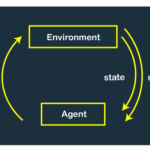
Reinforcement Learning: AI agents that learn through trial and error by interacting with an environment

Computer Vision: AI systems capable of interpreting and understanding visual data.

Natural Language Processing: AI techniques for understanding and processing human language.

Deep Learning: The advancement of deep neural networks and their applications in various domains.

The Biggest Lie In Protest

Protest Strategies For Beginners

Top 10 Tips To Grow Your Tech

Microsoft announces native Teams

Oppo working Find N Fold and Find

NASA scrubs second Artemis 1 launch

Lunar demo mission to provide “stress test” for NASA’s Artemis

Italian microsatellite promises orbital photo bonanza after

Uber drivers at record high as people record high as people as people

Tension between China and Taiwan has risen and what happens what happens

The ride-hailing app had been facing a driver shortage driver shortage

The meteoric rise of AMTD Digital’s shares has been likened been likened

THE BEST WINTER VACATION SPOTS IN THE USA