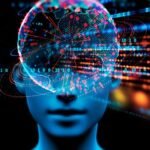
Evolution wired human brains to act like supercomputers

Now, scientists have a mathematical model that closely matches how the human brain processes visual information

Scientists have recently made a groundbreaking discovery confirming that the human brain possesses an innate capacity for complex calculations, akin to a high-powered computer. This remarkable capability, termed Bayesian inference, is integral to how humans comprehend the world around them.

Published in the journal Nature Communications, this study was conducted collaboratively by researchers from the University of Sydney, the University of Queensland, and the University of Cambridge. They constructed a precise mathematical model mirroring the workings of the human brain, particularly in the realm of visual perception. This model encapsulated all the necessary elements for executing Bayesian inference.

Bayesian inference is a statistical technique that blends prior knowledge with fresh evidence to formulate educated hypotheses. For instance, if an individual is familiar with the appearance of dogs and encounters a furry, four-legged creature, they may utilize their existing knowledge to deduce that it is a dog.

This innate capacity empowers humans to interpret their surroundings with exceptional accuracy and swiftness, in stark contrast to machines, which can struggle with rudimentary tasks like deciphering CAPTCHA security measures, such as identifying fire hydrants in a set of images.

Dr. Reuben Rideaux, the senior investigator behind the study from the University of Sydney’s School of Psychology, remarked, “Despite the conceptual appeal and explanatory power of the Bayesian approach, how the brain calculates probabilities is largely mysterious.”

He went on to state, “Our new study sheds light on this mystery. We discovered that the basic structure and connections within our brain’s visual system are set up in a way that allows it to perform Bayesian inference on the sensory data it receives.”

The significance of this discovery lies in the confirmation that the human brain is inherently structured to engage in this advanced form of processing, enhancing our ability to interpret our surroundings effectively.

Furthermore, this research not only validates existing theories concerning the brain’s utilization of Bayesian-like inference but also unveils new prospects for research and innovation. Harnessing the brain’s natural aptitude for Bayesian inference could lead to practical applications that benefit society.

Dr. Rideaux elaborated, stating, “Our research, while primarily focused on visual perception, holds broader implications across the spectrum of neuroscience and psychology. By understanding the fundamental mechanisms that the brain uses to process and interpret sensory data, we can pave the way for advancements in fields ranging from artificial intelligence, where replicating such brain functions can revolutionize machine learning, to clinical neurology, potentially offering new strategies for therapeutic interventions in the future.”

Posted in

Aihub Team

Leave a Comment


AI tech can be crucial for human society at large, says power-packed panel at B20 Summit

AI tech can be crucial for human society at large, says power-packed panel at B20 Summit

OpenAI introduces fine-tuning for GPT-3.5 Turbo and GPT-4

OpenAI introduces fine-tuning for GPT-3.5 Turbo and GPT-4

The Future of Handheld Gaming Could Dominate This Holiday Season

The Future of Handheld Gaming Could Dominate This Holiday Season

When Betting on Linux Security, Look at the Big Picture

When Betting on Linux Security, Look at the Big Picture

OpenAI launches ChatGPT Enterprise to accelerate business operations

OpenAI launches ChatGPT Enterprise to accelerate business operations

AI and Personal Finance: AI-driven tools for financial planning and investment management.

AI and Personal Finance: AI-driven tools for financial planning and investment management.

AI and the Gaming Industry: How AI is revolutionizing game development and player experiences.

AI and the Gaming Industry: How AI is revolutionizing game development and player experiences.

AI for Marine Ecology: AI technologies for studying marine ecosystems and conservation efforts.

AI for Marine Ecology: AI technologies for studying marine ecosystems and conservation efforts.

AI for Wildlife Conservation Drones: AI-equipped drones for wildlife monitoring and protection.

AI for Wildlife Conservation Drones: AI-equipped drones for wildlife monitoring and protection.

AI in Architecture and Design: AI applications for architectural planning and design optimization.

AI in Architecture and Design: AI applications for architectural planning and design optimization.

AI in Plant Breeding: AI-powered techniques for crop improvement and breeding.

AI in Plant Breeding: AI-powered techniques for crop improvement and breeding.

AI in Space Exploration Robotics: AI-driven robots exploring extraterrestrial environments.

AI in Space Exploration Robotics: AI-driven robots exploring extraterrestrial environments.

AI and Brain-Computer Music Interfaces: Creating music with the power of thought using AI.

AI and Brain-Computer Music Interfaces: Creating music with the power of thought using AI.

AI can predict certain forms of esophageal and stomach cancer

AI can predict certain forms of esophageal and stomach cancer

How artificial intelligence gave a paralyzed woman her voice back

How artificial intelligence gave a paralyzed woman her voice back

New modeling method helps to explain extreme heat waves

New modeling method helps to explain extreme heat waves

Sharing chemical knowledge between human and machine

Sharing chemical knowledge between human and machine

Scientists solve mystery of why thousands of octopus migrate to deep-sea thermal springs

Scientists solve mystery of why thousands of octopus migrate to deep-sea thermal springs

Planning algorithm enables high-performance flight

Planning algorithm enables high-performance flight

AI and the Future of Work: AI's impact on jobs and workforce transformation.

AI and the Future of Work: AI’s impact on jobs and workforce transformation.

AI for Disaster Relief Distribution: AI-optimized logistics for efficient disaster relief supply distribution.

AI for Disaster Relief Distribution: AI-optimized logistics for efficient disaster relief supply distribution.

AI for Food Quality Assurance: AI applications for monitoring food quality and safety.

AI for Food Quality Assurance: AI applications for monitoring food quality and safety.

AI for Mental Wellness Apps: AI-driven mental health applications and support platforms.

AI for Mental Wellness Apps: AI-driven mental health applications and support platforms.

AI in Dental Care: AI-assisted diagnostics and treatment planning in dentistry.

AI in Dental Care: AI-assisted diagnostics and treatment planning in dentistry.

AI in Language Education: AI-based language learning platforms and tools.

AI in Language Education: AI-based language learning platforms and tools.

AI in Oil Spill Cleanup: AI-driven approaches to manage and clean oil spills.

AI in Oil Spill Cleanup: AI-driven approaches to manage and clean oil spills.

AI in Sports Coaching: AI-powered coaching tools for athletes and teams.

AI in Sports Coaching: AI-powered coaching tools for athletes and teams.

AI unlikely to destroy most jobs, but clerical workers at risk, ILO says

AI unlikely to destroy most jobs, but clerical workers at risk, ILO says

Building new skills for existing employees top talent issue amid gen AI boom: Report

Building new skills for existing employees top talent issue amid gen AI boom: Report

Decoding future-ready talent strategies in the age of AI - ETHRWorldSEA

Decoding future-ready talent strategies in the age of AI – ETHRWorldSEA