Ecology and artificial intelligence: Stronger together

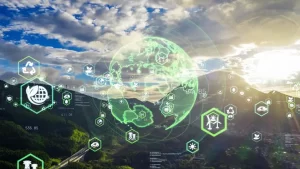
A new study suggests that the field of ecology could inspire a new generation of artificial intelligence (AI) systems that are more powerful, resilient, and socially responsible. Published in Proceedings of the National Academy of Sciences, the research advocates for a symbiotic relationship between AI and ecology, aiming to strengthen AI while addressing complex global challenges like disease outbreaks, biodiversity loss, and climate change.

The idea stems from the recognition that AI excels in certain tasks but faces limitations, and ecological principles could offer solutions to these challenges. Researchers argue that applying AI to ecology can help identify patterns, predict outcomes, and analyze complex systems more effectively, aiding in issues such as predicting disease transmission and understanding the impact of various factors on ecosystems.

Conversely, ecological systems, known for their resilience, can inspire more robust and adaptable AI architectures. Lessons from ecology may help AI overcome issues like mode collapse in neural networks, making AI systems more reliable and versatile. Ecological insights could lead to AI models that incorporate feedback loops, redundant pathways, and better decision-making frameworks, fostering “general intelligence” that enables reasoning beyond specific training data.

Furthermore, ecology can provide insights into emergent behaviors seen in large AI language models, such as hallucinations or false information generation. By studying complex ecological systems, researchers can gain a better understanding of the mechanisms behind these AI behaviors.

The convergence of AI and ecology offers numerous opportunities for mutual benefit. Resilience, for example, can be explored collaboratively to enhance both fields’ understanding of natural and artificial resilience, ultimately improving climate change adaptation. Additionally, closer collaboration can promote social responsibility, as AI can help integrate various knowledge systems, such as Indigenous and traditional knowledge, into ecological research, helping to rectify biases and injustices.

However, bridging the gap between these two fields will require concerted efforts to establish common ground, language, and funding sources. This study represents the initial step toward realizing the potential of combining AI and ecology to drive transformative perspectives and solutions in a rapidly changing world.

Posted in

Aihub Team

Leave a Comment


Yuval Noah Harari: AI and the future of humanity | Frontiers Forum Live 2023

Yuval Noah Harari: AI and the future of humanity | Frontiers Forum Live 2023

OpenAI created a PHYSICAL ROBOT?! (NEO = GPT-5 WITH BODY)

OpenAI created a PHYSICAL ROBOT?! (NEO = GPT-5 WITH BODY)

London Conference 2023: How can countries respond to great power competition?

London Conference 2023: How can countries respond to great power competition?

AI vs Machine Learning

AI vs Machine Learning

Interview with Mr.Yoshua Bengio

Interview with Mr.Yoshua Bengio

Interview with Mr.Nick Bostrom

Interview with Mr.Nick Bostrom

Interview with Mr.Stuart J. Russell

Interview with Mr.Stuart J. Russell

This 3D printed gripper doesn't need electronics to function

This 3D printed gripper doesn’t need electronics to function

Robotic hand rotates objects using touch, not vision

Robotic hand rotates objects using touch, not vision

Researchers develop low-cost sensor to enhance robots' sense of touch

Researchers develop low-cost sensor to enhance robots’ sense of touch

Reinforcement learning allows underwater robots to locate and track objects underwater

Reinforcement learning allows underwater robots to locate and track objects underwater

Artificial Intelligence Microscopy Market is Going to Boom | CAMECA, Celly.AI Corporation, Hitachi High-Tech Corporation, JEOL Ltd., Life Technologies Corporation, a Thermo Fisher Scientific company, Motic

Artificial Intelligence Microscopy Market is Going to Boom | CAMECA, Celly.AI Corporation, Hitachi High-Tech Corporation, JEOL Ltd., Life Technologies Corporation, a Thermo Fisher Scientific company, Motic

The Importance of Creating a Culture of Data

The Importance of Creating a Culture of Data

Scaling the AI Ladder

Scaling the AI Ladder

How to Accelerate the Use of AI in Organizations

How to Accelerate the Use of AI in Organizations

How IBM and Salesforce Are Challenging Traditional Business Models

How IBM and Salesforce Are Challenging Traditional Business Models

Future Designers Unleash Creativity with AI

Future Designers Unleash Creativity with AI

Five Emerging Trends in Technology Support Services

Five Emerging Trends in Technology Support Services

A Parable: “The Blind GPUs and the Elephant”

A Parable: “The Blind GPUs and the Elephant”

A New Wave: Transforming Our Understanding of Ocean Health

A New Wave: Transforming Our Understanding of Ocean Health

UN Security Council to hold first talks on AI risks

UN Security Council to hold first talks on AI risks

The Problem With Suing Gen AI Companies for Copyright Infringement

The Problem With Suing Gen AI Companies for Copyright Infringement

SEC’s Gary Gensler Believes AI Can Strengthen Its Enforcement Regime

SEC’s Gary Gensler Believes AI Can Strengthen Its Enforcement Regime

Robotics: New skin-like sensors fit almost everywhere

Robotics: New skin-like sensors fit almost everywhere

Labour Outlines Law to Ban Training AI Chatbot to Spread Terror

Labour Outlines Law to Ban Training AI Chatbot to Spread Terror

Winning with AI

Winning with AI

Watson Anywhere: The Future

Watson Anywhere: The Future

DataFam Roundup

DataFam Roundup

AI is Not Magic: It’s Time to Demystify and Apply

AI is Not Magic: It’s Time to Demystify and Apply

AI in 2020: From Experimentation to Adoption

AI in 2020: From Experimentation to Adoption