Ecology and artificial intelligence: Stronger together

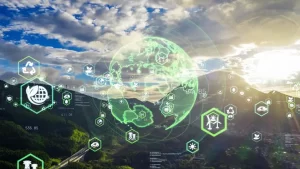
A new study suggests that the field of ecology could inspire a new generation of artificial intelligence (AI) systems that are more powerful, resilient, and socially responsible. Published in Proceedings of the National Academy of Sciences, the research advocates for a symbiotic relationship between AI and ecology, aiming to strengthen AI while addressing complex global challenges like disease outbreaks, biodiversity loss, and climate change.

The idea stems from the recognition that AI excels in certain tasks but faces limitations, and ecological principles could offer solutions to these challenges. Researchers argue that applying AI to ecology can help identify patterns, predict outcomes, and analyze complex systems more effectively, aiding in issues such as predicting disease transmission and understanding the impact of various factors on ecosystems.

Conversely, ecological systems, known for their resilience, can inspire more robust and adaptable AI architectures. Lessons from ecology may help AI overcome issues like mode collapse in neural networks, making AI systems more reliable and versatile. Ecological insights could lead to AI models that incorporate feedback loops, redundant pathways, and better decision-making frameworks, fostering “general intelligence” that enables reasoning beyond specific training data.

Furthermore, ecology can provide insights into emergent behaviors seen in large AI language models, such as hallucinations or false information generation. By studying complex ecological systems, researchers can gain a better understanding of the mechanisms behind these AI behaviors.

The convergence of AI and ecology offers numerous opportunities for mutual benefit. Resilience, for example, can be explored collaboratively to enhance both fields’ understanding of natural and artificial resilience, ultimately improving climate change adaptation. Additionally, closer collaboration can promote social responsibility, as AI can help integrate various knowledge systems, such as Indigenous and traditional knowledge, into ecological research, helping to rectify biases and injustices.

However, bridging the gap between these two fields will require concerted efforts to establish common ground, language, and funding sources. This study represents the initial step toward realizing the potential of combining AI and ecology to drive transformative perspectives and solutions in a rapidly changing world.

Posted in

Aihub Team

Leave a Comment


AI and Virtual Assistants: AI-driven virtual assistants, chatbots, and voice assistants for personalized user interactions.

AI and Business Process Automation: AI-powered automation of repetitive tasks and decision-making in business processes.

AI and Social Media: AI algorithms for content recommendation, sentiment analysis, and social network analysis.

AI for Environmental Monitoring: AI applications in monitoring and protecting the environment, including wildlife tracking and climate modeling.

AI in Cybersecurity: AI systems for threat detection, anomaly detection, and intelligent security analysis.

AI in Gaming: The use of AI techniques in game development, character behavior, and procedural content generation.

AI in Autonomous Vehicles: AI technologies powering self-driving cars and intelligent transportation systems.

AI Ethics: Ethical considerations and guidelines for the responsible development and use of AI systems.

AI in Education: AI-based systems for personalized learning, adaptive assessments, and intelligent tutoring.

AI in Finance: The use of AI algorithms for fraud detection, risk assessment, trading, and portfolio management in the financial sector.

AI in Healthcare: Applications of AI in medical diagnosis, drug discovery, patient monitoring, and personalized medicine.

Robotics: The integration of AI and robotics, enabling machines to perform physical tasks autonomously.

Explainable AI: Techniques and methods for making AI systems more transparent and interpretable

Reinforcement Learning: AI agents that learn through trial and error by interacting with an environment

Computer Vision: AI systems capable of interpreting and understanding visual data.

Natural Language Processing: AI techniques for understanding and processing human language.

Deep Learning: The advancement of deep neural networks and their applications in various domains.

The Biggest Lie In Protest

Protest Strategies For Beginners

Top 10 Tips To Grow Your Tech

Microsoft announces native Teams

Oppo working Find N Fold and Find

NASA scrubs second Artemis 1 launch

Lunar demo mission to provide “stress test” for NASA’s Artemis

Italian microsatellite promises orbital photo bonanza after

Uber drivers at record high as people record high as people as people

Tension between China and Taiwan has risen and what happens what happens

The ride-hailing app had been facing a driver shortage driver shortage

The meteoric rise of AMTD Digital’s shares has been likened been likened

THE BEST WINTER VACATION SPOTS IN THE USA