
Trending

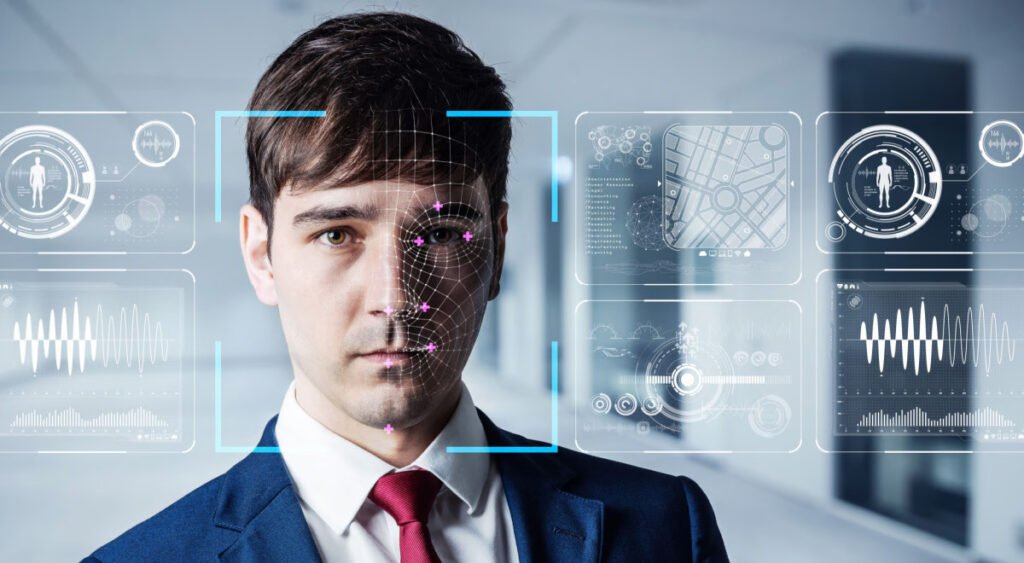
Amid growing concerns and increased scrutiny, the Detroit Police Department (DPD) faces yet another lawsuit, shedding light on yet another wrongful arrest resulting from a flawed facial recognition match. The latest victim, Porcha Woodruff, an African American woman who was eight months pregnant at the time, has become the sixth individual to step forward and reveal that they were wrongly implicated in a crime due to the controversial technology employed by law enforcement. Woodruff found herself accused of robbery and carjacking, an accusation she found incredulous, especially given her visibly pregnant state. This disturbing trend of wrongful arrests stemming from inaccurate facial recognition matches has raised serious alarms, particularly given that all six reported victims, as identified by the American Civil Liberties Union (ACLU), have been African Americans. Notably, Woodruff's case stands out as the first instance involving a woman. This incident marks the third known instance of a wrongful arrest within the past three years attributed specifically to the Detroit Police Department's reliance on faulty facial recognition technology. In a separate case, Robert Williams has an ongoing lawsuit against the DPD, represented by the ACLU of Michigan and the University of Michigan Law School’s Civil Rights Litigation Initiative (CRLI), stemming from his wrongful arrest in January 2020 due to the same flawed technology. Phil Mayor, Senior Staff Attorney at ACLU of Michigan, expressed deep concern over the situation, emphasizing that despite being aware of the serious repercussions of using flawed facial recognition technology for arrests, the Detroit Police Department continues to employ it. The usage of facial recognition technology by law enforcement has sparked heated debates due to concerns over accuracy, potential racial bias, and possible infringements on privacy and civil liberties. Studies have consistently shown that these systems exhibit higher error rates when identifying individuals with darker skin tones, disproportionately affecting marginalized communities. Critics argue that relying solely on facial recognition for making arrests poses significant risks, leading to grave consequences for innocent individuals, as exemplified by Woodruff's case. Calls for transparency and accountability have escalated, with civil rights organizations demanding that the Detroit Police Department cease using facial recognition technology until it can be rigorously evaluated and proven to be both unbiased and accurate. As the case unfolds, the public remains vigilant, awaiting the Detroit Police Department's response to mounting pressure to address concerns surrounding the misapplication of facial recognition technology and its impact on the rights and lives of innocent individuals.

Error-prone facial recognition leads to another wrongful arrest

Amid growing concerns and increased scrutiny, the Detroit Police Department (DPD) faces yet another lawsuit, shedding light on yet another…

Read More...
A team of researchers from The University of Texas at Austin has enhanced a commercial virtual reality headset to incorporate brain activity measurement capabilities, enabling the study of human reactions to stimuli like hints and stressors. By integrating a noninvasive electroencephalogram (EEG) sensor into a Meta VR headset, the research team has developed a comfortable and wearable device for long-term use. The EEG sensor captures the brain's electrical signals during immersive virtual reality interactions. This innovation holds diverse potential applications, ranging from aiding individuals with anxiety to assessing the attention and mental stress levels of pilots using flight simulators. Additionally, it allows individuals to perceive the world through a robot's eyes. Nanshu Lu, a professor at the Cockrell School of Engineering's Department of Aerospace Engineering and Engineering Mechanics, who led the research, emphasized the heightened immersion of virtual reality and the ability of their technology to yield improved measurements of brain responses within such environments. Although the combination of VR and EEG sensors exists in the commercial domain, the researchers note that current devices are expensive and less comfortable for users, thus limiting their usage duration and applications. Addressing these challenges, the team designed soft, conductive, and spongy electrodes that overcome issues related to traditional electrodes. These modified VR headsets integrate these electrodes into the top strap and forehead pad, utilizing a flexible circuit with conductive traces similar to electronic tattoos, along with an EEG recording device attached to the headset's rear. This technology aligns with a larger research initiative at UT Austin focused on a robot delivery network, which will also facilitate an extensive study of human-robot interactions. The VR headsets, enhanced with EEG capabilities, will enable observers to experience events from a robot's perspective and simultaneously measure the cognitive load of prolonged observations. To validate the effectiveness of the VR EEG headset, the researchers developed a driving simulation game. Collaborating with José del R. Millán, an expert in brain-machine interfaces, the team created a scenario where users respond to turn commands by pressing a button, and the EEG records brain activity to assess their attention levels. The researchers have initiated preliminary patent procedures for their EEG technology and are open to collaborations with VR companies to integrate their innovation directly into VR headsets. The research team includes experts from various departments such as Electrical and Computer Engineering, Aerospace Engineering and Engineering Mechanics, Mechanical Engineering, Biomedical Engineering, and Artue Associates Inc. in South Korea.

Modified virtual reality tech can measure brain activity

A team of researchers from The University of Texas at Austin has enhanced a commercial virtual reality headset to incorporate…

Read More...
Today in AI: Alibaba open-sources two AI models, AI-based HYRGPT eliminates the first two steps of hiring and more

Today in AI: Alibaba open-sources two AI models, AI-based HYRGPT eliminates the first two steps of hiring and more

The intensifying AI rivalry between the United States and China has reached a new level as Alibaba, the Chinese tech…

Read More...
AI and Space Exploration: The role of AI in space research and robotics.

AI and Space Exploration: The role of AI in space research and robotics.

Space exploration has always been at the forefront of human curiosity and ambition. As we venture further into the cosmos,…

Read More...
AI and Sports Analytics: Enhancing performance analysis and player insights with AI.

AI and Sports Analytics: Enhancing performance analysis and player insights with AI.

In the world of sports, success often hinges on the smallest of margins. Athletes and teams continuously strive to gain…

Read More...
AI and Virtual Reality: The synergy between AI and virtual reality technologies.

AI and Virtual Reality: The synergy between AI and virtual reality technologies.

Artificial Intelligence (AI) and Virtual Reality (VR) are two groundbreaking technologies that have reshaped various industries independently. However, when combined,…
Read More...
AI for Mental Health: How AI is aiding in early detection and treatment of mental health conditions.

AI for Mental Health: How AI is aiding in early detection and treatment of mental health conditions.

Mental health is an integral aspect of overall well-being, yet it remains a significant global challenge. According to the World…

Read More...
AI in Disaster Response: Utilizing AI for real-time disaster monitoring and relief efforts.

AI in Disaster Response: Utilizing AI for real-time disaster monitoring and relief efforts.

Natural disasters such as earthquakes, hurricanes, wildfires, and floods have devastating consequences, affecting millions of lives and causing extensive damage…

Read More...
AI in Fashion Design: AI-driven tools for fashion trend forecasting and personalized styling.

AI in Fashion Design: AI-driven tools for fashion trend forecasting and personalized styling.

The fashion industry is an ever-evolving realm of creativity, where trends emerge and fade at lightning speed. In recent years,…

Read More...
AI in Human Resources: Streamlining HR processes with AI-driven talent acquisition and management.

AI in Human Resources: Streamlining HR processes with AI-driven talent acquisition and management.

Human Resources (HR) plays a pivotal role in any organization, responsible for attracting, developing, and retaining top talent. In recent…

Read More...