

News

A team of researchers from The University of Texas at Austin has enhanced a commercial virtual reality headset to incorporate brain activity measurement capabilities, enabling the study of human reactions to stimuli like hints and stressors. By integrating a noninvasive electroencephalogram (EEG) sensor into a Meta VR headset, the research team has developed a comfortable and wearable device for long-term use. The EEG sensor captures the brain's electrical signals during immersive virtual reality interactions. This innovation holds diverse potential applications, ranging from aiding individuals with anxiety to assessing the attention and mental stress levels of pilots using flight simulators. Additionally, it allows individuals to perceive the world through a robot's eyes. Nanshu Lu, a professor at the Cockrell School of Engineering's Department of Aerospace Engineering and Engineering Mechanics, who led the research, emphasized the heightened immersion of virtual reality and the ability of their technology to yield improved measurements of brain responses within such environments. Although the combination of VR and EEG sensors exists in the commercial domain, the researchers note that current devices are expensive and less comfortable for users, thus limiting their usage duration and applications. Addressing these challenges, the team designed soft, conductive, and spongy electrodes that overcome issues related to traditional electrodes. These modified VR headsets integrate these electrodes into the top strap and forehead pad, utilizing a flexible circuit with conductive traces similar to electronic tattoos, along with an EEG recording device attached to the headset's rear. This technology aligns with a larger research initiative at UT Austin focused on a robot delivery network, which will also facilitate an extensive study of human-robot interactions. The VR headsets, enhanced with EEG capabilities, will enable observers to experience events from a robot's perspective and simultaneously measure the cognitive load of prolonged observations. To validate the effectiveness of the VR EEG headset, the researchers developed a driving simulation game. Collaborating with José del R. Millán, an expert in brain-machine interfaces, the team created a scenario where users respond to turn commands by pressing a button, and the EEG records brain activity to assess their attention levels. The researchers have initiated preliminary patent procedures for their EEG technology and are open to collaborations with VR companies to integrate their innovation directly into VR headsets. The research team includes experts from various departments such as Electrical and Computer Engineering, Aerospace Engineering and Engineering Mechanics, Mechanical Engineering, Biomedical Engineering, and Artue Associates Inc. in South Korea.

Modified virtual reality tech can measure brain activity

A team of researchers from The University of Texas at Austin has enhanced a commercial virtual reality headset to incorporate…

Read More...
Today in AI: Alibaba open-sources two AI models, AI-based HYRGPT eliminates the first two steps of hiring and more

Today in AI: Alibaba open-sources two AI models, AI-based HYRGPT eliminates the first two steps of hiring and more

The intensifying AI rivalry between the United States and China has reached a new level as Alibaba, the Chinese tech…

Read More...
What's going on with Google Assistant?

What’s going on with Google Assistant?

Once upon a time, Google was deeply committed to promoting and improving Google Assistant. It was a central focus at…

Read More...
UK intelligence agencies seek to weaken data protection safeguards

UK intelligence agencies seek to weaken data protection safeguards

UK intelligence agencies are requesting the government to ease surveillance laws to facilitate the training of AI models. GCHQ, MI5,…

Read More...
MBA Grads With Startup Ambitions Attracted to Health Care, AI

MBA Grads With Startup Ambitions Attracted to Health Care, AI

Data from Symphony, an international software design and development firm, reveals that the class of 2023 from Stanford and Harvard…

Read More...
IBM and Hugging Face release AI foundation model for climate science

IBM and Hugging Face release AI foundation model for climate science

IBM and Hugging Face have joined forces to democratize access to AI technology for climate science by releasing the watsonx.ai…

Read More...
BSI publishes guidance to boost trust in AI for healthcare

BSI publishes guidance to boost trust in AI for healthcare

The British Standards Institution (BSI) has released a comprehensive guidance document titled “Validation framework for the use of AI within…

Read More...
Apple plays nice with others for an OpenUSD metaverse

Apple plays nice with others for an OpenUSD metaverse

Apple, Adobe, Pixar, Autodesk, NVIDIA, and the Joint Development Foundation have joined forces to create the Alliance for OpenUSD (AOUSD)…
Read More...
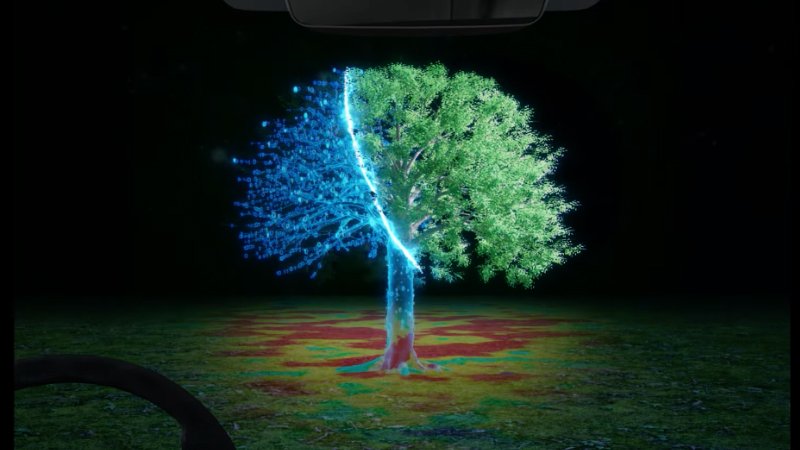
Thermal imaging innovation allows AI to see through pitch darkness like broad daylight

Thermal imaging innovation allows AI to see through pitch darkness like broad daylight

Researchers at Purdue University have developed a groundbreaking method called HADAR (heat-assisted detection and ranging) that enhances traditional machine vision…

Read More...
Meta bets on AI chatbots to retain users

Meta bets on AI chatbots to retain users

Meta, formerly known as Facebook, is reportedly working on advanced AI chatbots with human-like personalities to enhance user retention efforts….

Read More...