Building reliable Machine Learning models with limited training data

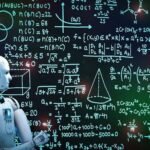
Researchers from the University of Cambridge and Cornell University have made a breakthrough in developing Machine Learning models capable of comprehending complex equations in real-world scenarios with significantly less training data than previously thought necessary. Their discovery particularly applies to partial differential equations (PDEs), a class of physical equations that describe how natural phenomena evolve over space and time. This achievement has been detailed in their study, titled ‘Elliptic PDE learning is provably data-efficient,’ published in the Proceedings of the National Academy of Sciences.

Traditionally, Machine Learning models require substantial amounts of training data to deliver accurate results, typically involving humans annotating extensive datasets, such as image collections. Dr. Nicolas Boullé, the first author of the study, noted that this manual training process, while effective, is also time-consuming and costly. The researchers aimed to determine the minimum amount of data required to train models effectively while maintaining reliability.

The team’s focus was on partial differential equations (PDEs), which serve as fundamental tools in understanding physical laws governing natural phenomena. These equations, known for their relative simplicity, provided a basis for investigating why Machine Learning techniques have proven successful in physics and similar domains.

The researchers discovered that PDEs modeling diffusion possess a structure conducive to designing AI models. By incorporating known physics into the training data, they were able to enhance accuracy and performance. They developed an efficient algorithm to predict solutions for PDEs under various conditions, leveraging both short and long-range interactions within the equations. This approach enabled them to determine that, particularly in the field of physics, Machine Learning models can be reliable with relatively limited training data.

The researchers anticipate that their techniques will empower data scientists to demystify the inner workings of many Machine Learning models and design models that can be interpreted by humans. Nevertheless, further research is required to ensure that these models are learning the correct principles. The intersection of Machine Learning and physics promises exciting opportunities to address complex mathematical and physical questions.

Posted in

Aihub Team

Leave a Comment


AI and Virtual Assistants: AI-driven virtual assistants, chatbots, and voice assistants for personalized user interactions.
AI and Business Process Automation: AI-powered automation of repetitive tasks and decision-making in business processes.

AI and Social Media: AI algorithms for content recommendation, sentiment analysis, and social network analysis.

AI for Environmental Monitoring: AI applications in monitoring and protecting the environment, including wildlife tracking and climate modeling.

AI in Cybersecurity: AI systems for threat detection, anomaly detection, and intelligent security analysis.

AI in Gaming: The use of AI techniques in game development, character behavior, and procedural content generation.

AI in Autonomous Vehicles: AI technologies powering self-driving cars and intelligent transportation systems.

AI Ethics: Ethical considerations and guidelines for the responsible development and use of AI systems.

AI in Education: AI-based systems for personalized learning, adaptive assessments, and intelligent tutoring.

AI in Finance: The use of AI algorithms for fraud detection, risk assessment, trading, and portfolio management in the financial sector.

AI in Healthcare: Applications of AI in medical diagnosis, drug discovery, patient monitoring, and personalized medicine.

Robotics: The integration of AI and robotics, enabling machines to perform physical tasks autonomously.

Explainable AI: Techniques and methods for making AI systems more transparent and interpretable

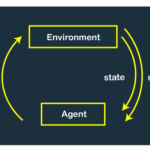
Reinforcement Learning: AI agents that learn through trial and error by interacting with an environment

Computer Vision: AI systems capable of interpreting and understanding visual data.

Natural Language Processing: AI techniques for understanding and processing human language.

Deep Learning: The advancement of deep neural networks and their applications in various domains.

The Biggest Lie In Protest

Protest Strategies For Beginners

Top 10 Tips To Grow Your Tech

Microsoft announces native Teams

Oppo working Find N Fold and Find

NASA scrubs second Artemis 1 launch

Lunar demo mission to provide “stress test” for NASA’s Artemis

Italian microsatellite promises orbital photo bonanza after

Uber drivers at record high as people record high as people as people

Tension between China and Taiwan has risen and what happens what happens

The ride-hailing app had been facing a driver shortage driver shortage

The meteoric rise of AMTD Digital’s shares has been likened been likened

THE BEST WINTER VACATION SPOTS IN THE USA