Artificial Intelligence Designs Functional Computer in Record-Breaking Five Hours

Artificial intelligence (AI) researchers in China have achieved a significant breakthrough by developing a tool capable of designing a working computer in less than five hours. The team of 19 computer scientists from various institutions aimed to demonstrate that machines can create computer chips in a manner similar to humans. The researchers claimed that the AI achieved this feat 1,000 times faster than a human team, marking a major stride towards the development of self-evolving machines.

In a paper detailing their research, the scientists highlighted the significance of design activity in distinguishing humanity from other animals and traditional machines. They presented a new AI approach that automates the design of a central processing unit (CPU), which serves as the brain of a computer and is one of the most intricate devices created by humanity.

The project involved designing an industrial-scale RISC-V CPU capable of running the Linux operating system and achieving an impressive accuracy rate of 99.99% in validation tests. By bypassing the manual programming and verification process typically performed by human teams, the AI significantly reduced the design time and resources required for the project. Furthermore, the AI autonomously made discoveries in computer design, including uncovering the von Neumann architecture, invented in 1945.

While the performance of the designed CPU is relatively modest compared to modern computers, akin to a 1991 Intel 80486SX CPU, the researchers believe that developing this AI approach has the potential to revolutionize the semiconductor industry by significantly reducing the design cycle. Nvidia, a leading AI chip maker, has also explored AI-powered chip design to optimize cost and performance, revealing their approach in March.

The achievements of these researchers highlight the growing impact of AI in the field of computer chip design. With further advancements and refinements, AI-powered tools have the potential to reshape the industry, making the design process more efficient and opening doors to innovations in computer architecture. As AI continues to evolve, we can anticipate accelerated progress in designing complex and advanced computing systems.

Posted in

Aihub Team

Leave a Comment


AI and Virtual Assistants: AI-driven virtual assistants, chatbots, and voice assistants for personalized user interactions.

AI and Business Process Automation: AI-powered automation of repetitive tasks and decision-making in business processes.

AI and Social Media: AI algorithms for content recommendation, sentiment analysis, and social network analysis.

AI for Environmental Monitoring: AI applications in monitoring and protecting the environment, including wildlife tracking and climate modeling.

AI in Cybersecurity: AI systems for threat detection, anomaly detection, and intelligent security analysis.

AI in Gaming: The use of AI techniques in game development, character behavior, and procedural content generation.

AI in Autonomous Vehicles: AI technologies powering self-driving cars and intelligent transportation systems.

AI Ethics: Ethical considerations and guidelines for the responsible development and use of AI systems.

AI in Education: AI-based systems for personalized learning, adaptive assessments, and intelligent tutoring.

AI in Finance: The use of AI algorithms for fraud detection, risk assessment, trading, and portfolio management in the financial sector.

AI in Healthcare: Applications of AI in medical diagnosis, drug discovery, patient monitoring, and personalized medicine.

Robotics: The integration of AI and robotics, enabling machines to perform physical tasks autonomously.

Explainable AI: Techniques and methods for making AI systems more transparent and interpretable

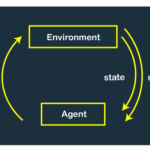
Reinforcement Learning: AI agents that learn through trial and error by interacting with an environment

Computer Vision: AI systems capable of interpreting and understanding visual data.

Natural Language Processing: AI techniques for understanding and processing human language.

Deep Learning: The advancement of deep neural networks and their applications in various domains.

The Biggest Lie In Protest

Protest Strategies For Beginners

Top 10 Tips To Grow Your Tech

Microsoft announces native Teams

Oppo working Find N Fold and Find

NASA scrubs second Artemis 1 launch

Lunar demo mission to provide “stress test” for NASA’s Artemis

Italian microsatellite promises orbital photo bonanza after

Uber drivers at record high as people record high as people as people

Tension between China and Taiwan has risen and what happens what happens

The ride-hailing app had been facing a driver shortage driver shortage

The meteoric rise of AMTD Digital’s shares has been likened been likened

THE BEST WINTER VACATION SPOTS IN THE USA