AI in Gaming: The use of AI techniques in game development, character behavior, and procedural content generation.
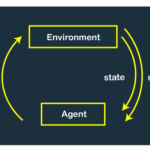
Non-Player Character (NPC) Behavior: AI algorithms are used to create intelligent and realistic behavior for NPCs. NPCs can navigate the game world, make decisions, and interact with players or other NPCs. Techniques such as finite state machines, behavior trees, and reinforcement learning are employed to simulate human-like behavior. Adaptive Difficulty: AI can dynamically adjust the difficulty level of games to match the player’s skill level. By analyzing player behavior, AI algorithms can determine the appropriate challenge level and provide a more engaging and personalized gaming experience
. Procedural Content Generation (PCG): AI can generate game content such as levels, maps, quests, and items procedurally. This allows for the creation of virtually infinite game worlds with unique challenges and experiences. PCG techniques, including procedural generation algorithms and generative adversarial networks (GANs), are used to create diverse and immersive game environments. Game Testing and
Quality Assurance: AI can automate game testing and quality assurance processes. AI algorithms can play through game levels, identify bugs, and provide feedback on game mechanics, balance, and performance. This helps developers identify and resolve issues more efficiently, leading to higher-quality games.
Player Analytics and Personalization: AI algorithms can analyze player data and behavior to gain insights into player preferences, engagement patterns, and skill levels. This information can be used to personalize gameplay experiences, offer targeted recommendations, and provide adaptive storytelling tailored to individual players.
Game Design Assistance: AI can assist game designers in various ways. AI algorithms can generate design suggestions, evaluate game mechanics, and provide feedback on level design. This can help streamline the game development process and facilitate the creation of innovative and engaging gameplay experiences.
Natural Language Processing (NLP): AI-powered NLP techniques can enable more immersive and interactive dialogue systems within games. Players can have conversations with NPCs using natural language, making the game world more dynamic and responsive. AI in gaming continues to evolve rapidly, with advancements in machine learning, computer vision, and natural language processing contributing to more sophisticated and engaging gaming experiences. These AI techniques are used to create more realistic, interactive, and adaptive games that cater to individual players’ preferences and provide immersive and challenging gameplay.