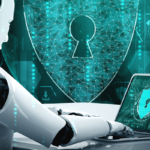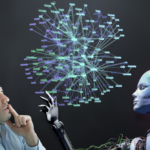
AI in Brain-Computer Interfaces: AI-powered BCI advancements for medical and assistive purposes.

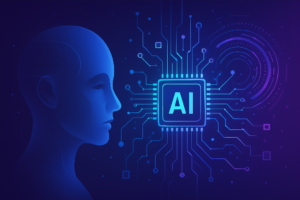
Imagine a world where thoughts can be translated into actions, where the mind’s commands are communicated seamlessly to computers, and where individuals with paralysis regain the ability to interact with the world. This is the realm of Brain-Computer Interfaces (BCIs), a cutting-edge field that is rapidly advancing with the integration of Artificial Intelligence (AI). In this blog, we delve into the fascinating synergy between AI and BCIs and explore how this convergence is reshaping medical and assistive technologies.

The Power of Brain-Computer Interfaces

Brain-Computer Interfaces establish direct communication pathways between the brain and external devices. These interfaces hold transformative potential for various applications:

  1. Medical Rehabilitation: BCIs offer hope to individuals with paralysis or neurodegenerative disorders by enabling them to control prosthetics, exoskeletons, or even their own limbs through neural signals.
  2. Communication: BCIs can restore communication abilities for those with severe speech and motor impairments, allowing them to express thoughts and interact with the world.
  3. Neuroscientific Research: BCIs provide insights into brain function, neural pathways, and cognitive processes, advancing our understanding of the human brain.
  4. Enhanced Learning: BCIs can facilitate accelerated learning by directly enhancing brain functions such as memory consolidation or attention.

The Role of AI in BCIs

AI technology has catalyzed significant advancements in BCIs:

  1. Signal Processing: AI algorithms process raw neural data, extracting meaningful patterns and translating them into actionable commands for external devices.
  2. Feature Extraction: AI identifies relevant features in neural signals, enhancing the accuracy of detecting specific intentions or commands.
  3. Adaptability: AI-powered BCIs can adapt to changes in neural signals over time, ensuring consistent performance despite variations in brain activity.
  4. Predictive Modeling: AI predicts user intentions, minimizing latency and enabling faster and more intuitive interactions with external devices.

Advancements and Real-World Applications

  1. Assistive Devices: AI-powered BCIs have enabled paralyzed individuals to control robotic arms, enabling them to perform tasks like eating, drinking, and writing.
  2. Neural Communication: Non-verbal individuals can communicate by selecting letters or words on a screen through their neural activity, restoring their ability to express thoughts.
  3. Neurofeedback Therapy: AI-enhanced BCIs enable individuals to receive real-time feedback about their brain activity, aiding in treatments for conditions like ADHD or anxiety.
  4. Neuroprosthetics: Advanced BCIs coupled with AI have made strides in creating bionic limbs that respond to natural neural commands, restoring mobility and dexterity.

Ethical and Privacy Considerations

As BCIs and AI merge, ethical considerations arise:

  1. Informed Consent: Ensuring that individuals fully understand the implications of connecting their minds to external devices is paramount.
  2. Data Privacy: Protecting neural data from unauthorized access or misuse requires robust security measures.
  3. Neuro-Privacy: The ethical handling of neural data raises questions about personal privacy and the potential for unwarranted intrusion into one’s thoughts.
Posted in

Aihub Team

Leave a Comment


Is AI electricity or the telephone?

Is AI electricity or the telephone?

Introducing Superalignment

Introducing Superalignment

GPT-4 API general availability and deprecation of older models in the Completions API

GPT-4 API general availability and deprecation of older models in the Completions API

Democratic inputs to AI

Democratic inputs to AI

DALL-E 2 Chimera prompts

DALL-E 2 Chimera prompts

Can AI predict the future?

Can AI predict the future?

Bing is sadly too desperate to make AI work

Bing is sadly too desperate to make AI work

AI progress is scaring people

AI progress is scaring people

AI in the modeling industry

AI in the modeling industry

AI Driven Testing

AI Driven Testing

AI as Co-Creator of Test Design

AI as Co-Creator of Test Design

 The Good, The Bad, & The Hallucinatory – How AI can help and hurt secure development

 The Good, The Bad, & The Hallucinatory – How AI can help and hurt secure development

The CX Paradigm Shift: Exploring Generative AI’s Impact on Customer Experience

The CX Paradigm Shift: Exploring Generative AI’s Impact on Customer Experience

Edge Computing Expo Europe, 26-27 September 2023

Edge Computing Expo Europe, 26-27 September 2023

Digital Transformation Week Europe | 26-27 September 2023

Digital Transformation Week Europe | 26-27 September 2023

The Security of Artificial Intelligence

The Security of Artificial Intelligence

AI Combined with Automation is the Perfect Marriage for Scalable, Intelligent Operations

AI Combined with Automation is the Perfect Marriage for Scalable, Intelligent Operations

AI and Phishing: What’s the Risk to Your Organization?

AI and Phishing: What’s the Risk to Your Organization?

Why Claude AI is your new go-to for complex tasks

Why Claude AI is your new go-to for complex tasks

The Smart Home Jury Is Still Out on Matter, AI Could Help

The Smart Home Jury Is Still Out on Matter, AI Could Help

Explore Jasper AI, a writing tool that makes creators’ lives easier

Explore Jasper AI, a writing tool that makes creators’ lives easier

Enjoy the journey while your business runs on autopilot

Enjoy the journey while your business runs on autopilot

ChatGPT failed to get service status: Fixes and alternatives to try

ChatGPT failed to get service status: Fixes and alternatives to try

ChatGPT Down? OpenAI Chatbot ChatGPT Reportedly Hit by Global Outage, Users Lodge Complaints on Twitter

ChatGPT Down? OpenAI Chatbot ChatGPT Reportedly Hit by Global Outage, Users Lodge Complaints on Twitter

Blue Chip Ads Feeding Unreliable AI-Generated News Websites

Blue Chip Ads Feeding Unreliable AI-Generated News Websites

Social media algorithms are still failing to counter misleading content

Social media algorithms are still failing to counter misleading content

Rishabh Mehrotra, research lead, Spotify: Multi-stakeholder thinking with AI

Rishabh Mehrotra, research lead, Spotify: Multi-stakeholder thinking with AI

Researchers from Microsoft and global leading universities study the ‘offensive AI’ threat

Researchers from Microsoft and global leading universities study the ‘offensive AI’ threat

GTC 2021: Nvidia debuts accelerated computing libraries, partners with Google, IBM, and others to speed up quantum research

GTC 2021: Nvidia debuts accelerated computing libraries, partners with Google, IBM, and others to speed up quantum research

Facebook is developing a news-summarising AI called TL;DR

Facebook is developing a news-summarising AI called TL;DR