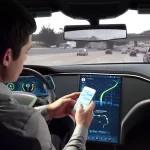
AI in Autonomous Vehicles: AI technologies powering self-driving cars and intelligent transportation systems.
Perception: AI algorithms enable autonomous vehicles to perceive and interpret their environment. Computer vision techniques, combined with deep learning algorithms, analyze sensor data from cameras, lidar, radar, and other sensors to detect objects, recognize road signs, and understand the surrounding environment. Localization and Mapping: AI helps in creating high-definition maps and accurately localizing the vehicle within the mapped environment. Simultaneous Localization and Mapping (SLAM) algorithms use sensor data to build maps and determine the vehicle’s position in real-time, allowing for precise navigation.
Planning and Decision-Making: AI algorithms are responsible for generating optimal driving paths and making real-time decisions based on the perceived environment. Path planning algorithms consider factors like traffic rules, road conditions, and other vehicles to plan safe and efficient routes. Decision-making algorithms analyze various inputs to choose appropriate actions, such as accelerating, braking, or changing lanes.
Sensor Fusion: AI techniques are used to fuse data from multiple sensors to obtain a comprehensive and accurate understanding of the vehicle’s surroundings. Sensor fusion algorithms integrate data from cameras, lidar, radar, and other sensors to create a unified perception of the environment, enhancing reliability and safety.
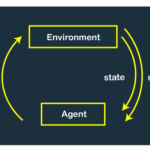
Control Systems: AI-based control systems translate high-level plans and decisions into low-level actions for the vehicle. These systems ensure precise control of steering, acceleration, and braking. Reinforcement learning techniques are also employed to train control policies that optimize vehicle behavior and improve performance.
Safety and Fail-Safe Mechanisms: AI is used to implement safety measures and fail-safe mechanisms in autonomous vehicles. Redundancy, monitoring systems, and fault detection algorithms help identify and mitigate risks and ensure safe operation. AI also enables the development of predictive maintenance systems to detect and address potential failures before they occur. Intelligent Transportation Systems: AI technologies are applied beyond individual vehicles to create intelligent transportation systems. These systems use AI algorithms to optimize traffic flow, manage congestion, and improve overall transportation efficiency.
AI-powered traffic signal control, dynamic route planning, and predictive traffic modeling are some examples. Data Analysis and Learning: AI enables the analysis of massive amounts of data collected from autonomous vehicles and transportation systems.
Machine learning techniques are applied to uncover patterns, optimize performance, and continuously improve the autonomous driving capabilities. The development and deployment of autonomous vehicles involve a combination of AI, robotics, sensor technologies, and infrastructure considerations. AI’s role is critical in enabling safe, efficient, and reliable autonomous transportation systems.