AI Ethics, Governance & Risk Management: Building Trust in the Age of Intelligent Systems
As artificial intelligence becomes deeply embedded in business operations, healthcare, finance, and public services, one question now outweighs all others: Can AI be trusted?
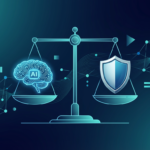
In 2026, the success of AI initiatives is no longer measured only by performance or innovation—but by ethics, governance, and risk management. Organizations that fail to address these dimensions face regulatory scrutiny, reputational damage, and operational risk. Those that get it right build lasting trust and competitive advantage.
Why AI Ethics Matters More Than Ever
AI systems increasingly influence high-stakes decisions—from credit approvals and hiring to medical diagnostics and legal analysis. When these systems are opaque, biased, or misaligned with human values, the consequences can be severe.
Ethical AI focuses on:
- Fairness and non-discrimination
- Transparency and explainability
- Accountability for AI-driven outcomes
- Respect for privacy and human autonomy
In 2026, ethical AI is no longer optional—it is a baseline expectation.
The Shift from Principles to Practice
For years, organizations published AI ethics guidelines. Today, the focus has shifted to operationalizing ethics across the AI lifecycle.
This means embedding ethical considerations into:
- Data collection and labeling
- Model training and evaluation
- Deployment and real-world use
- Continuous monitoring and improvement
Ethics must be designed into systems—not added as an afterthought.
AI Governance: From Policy to Control
AI governance provides the structure and oversight needed to manage AI responsibly at scale. Effective governance frameworks define:
- Who can build, deploy, and modify AI models
- What data can be used—and for what purpose
- How AI decisions are reviewed and audited
- When human intervention is required
In 2026, leading organizations treat AI governance with the same rigor as financial or cybersecurity governance.
Key Components of Modern AI Governance
🔹 Model Accountability
Clear ownership for every AI system—ensuring someone is responsible for outcomes, updates, and compliance.
🔹 Transparency & Explainability
Tools that allow stakeholders to understand how models reach decisions, especially in regulated industries.
🔹 Lifecycle Management
Version control, documentation, and approval processes for models from development to retirement.
🔹 Compliance Alignment
Governance frameworks aligned with evolving global AI regulations and industry standards.
Managing AI Risk in a Complex Landscape
AI introduces new categories of risk that traditional risk management frameworks were not designed to handle.
Common AI risks include:
- Bias and unfair outcomes
- Model hallucinations and inaccuracies
- Data leakage and privacy violations
- Security vulnerabilities and prompt injection
- Reputational and legal exposure
Risk management in 2026 requires continuous assessment—not one-time checks.
Human-in-the-Loop: A Critical Safeguard
Despite advances in autonomy, human oversight remains essential. Human-in-the-loop systems ensure that:
- High-impact decisions can be reviewed or overridden
- Edge cases are handled responsibly
- Accountability remains clear
The most trusted AI systems are those designed for collaboration between humans and machines.
Regulation Is Reshaping AI Strategy
Governments worldwide are introducing AI regulations focused on:
- Risk-based classification of AI systems
- Mandatory transparency and documentation
- Data protection and consent
- Penalties for misuse or negligence
In 2026, regulatory readiness is becoming a key factor in AI adoption decisions—especially for enterprises operating across regions.
Ethics as a Competitive Advantage
Organizations that lead in ethical AI gain:
- Greater customer trust
- Faster regulatory approvals
- Stronger brand reputation
- More sustainable AI adoption
Ethics is no longer a constraint—it’s a differentiator.
What’s Next for AI Ethics & Governance?
Looking ahead, we can expect:
- Standardized AI audit frameworks
- Automated governance tools embedded in AI stacks
- Greater board-level accountability for AI decisions
- Cross-industry collaboration on ethical standards
Trust will become the most valuable currency in the AI economy.
AI ethics, governance, and risk management define whether AI becomes a force for progress—or a source of harm. In 2026, organizations must move beyond ambition and focus on responsible execution.
The future of AI will not be decided by the smartest models—but by the most trusted ones.